
How to Check Atlanta Criminal History
Begin with the event, not with a broad name search. An Atlanta incident report explains what officers recorded. A municipal docket tracks a citation or city charge. DeKalb clerks hold filed county prosecutions, while the sheriff keeps a booking made at the county jail. Those sources answer different questions and may update on different days.
Use this five-part Atlanta record check to keep the custodians straight:
- Confirm the arresting agency from a report number, citation, receipt, or paperwork.
- For an APD event, submit the precise report or media request through the official Atlanta Police channel.
- Check Atlanta Municipal Court for a city ordinance, traffic, or eligible misdemeanor matter.
- For a DeKalb booking or prosecution, check the sheriff and the correct DeKalb court clerk.
- For your own statewide history, use a participating law-enforcement agency or the official GCIC process.
A person reviewing an Atlanta matter should compare identifiers rather than assume every source will show the same label. Names can vary, charges can change, and a report may exist before a clerk opens a case.
Atlanta Criminal Records Cross Boundaries
Atlanta occupies parts of Fulton and DeKalb counties. That is the defining local records issue. Citywide population or crime totals cannot be called DeKalb-only totals, and an east-side address does not by itself prove which office owns a report. Atlanta Police may create the incident file, while DeKalb County later holds the booking and court case.
The safest locator is the incident or case number paired with the arresting agency. If neither is known, note the exact street address, date, time, and type of event. Ask which agency responded before sending a request. This avoids sending an APD request to DeKalb County Police or looking for a Fulton case in a DeKalb court.
Boundary check: Atlanta city limits, county lines, police beats, and postal addresses do not always describe the same service area. Verify the agency on the source document.
Atlanta Criminal Statistics Need Context
Atlanta's Census population covers the whole city, not just its DeKalb territory. APD crime reporting also follows agency geography rather than a neat county-only slice. A citywide count should never be labeled as the number of incidents in DeKalb County.
For record research, an individual report and its exact location are more useful than a broad rate. When comparing totals, check the source year, geographic boundary, and reporting agency. That context prevents a Fulton-and-DeKalb figure from being used to describe only east-side Atlanta.
The Atlanta Police Department
The Atlanta Police open-records page is the official route for APD reports and other existing police material. A useful request identifies the incident report, arrest report, body-camera material, or 911/CAD record sought. Include the incident number when available, plus the date, time, exact location, and a focused description.
Atlanta general city records and Atlanta Police records have separate custodians. Police material should not be sent as a vague request for every record connected to a name. A narrow request is easier to locate, price, review, and redact. Some records can be withheld or redacted while an investigation remains active or when disclosure would invade protected privacy.
APD is also not the only police custodian within Atlanta. An event on MARTA property may belong to MARTA Police. The agency name on the report, citation, or property receipt should control the first request.
Atlanta Police Request Fields
The city portal uses contact and event details to route a request and send status or cost notices. These fields are not a criminal-history search by themselves. They help the records unit identify a specific existing file.
| Field | Use | Best detail |
|---|---|---|
| Department and record type | Routes the request | Select Police and exact report or media |
| Incident or case number | Strongest locator | Copy it exactly from paperwork |
| Date, time, and location | Separates similar events | Give the full street address |
| Description | Defines the record | Ask for identifiable existing material |
| Requester contact | Supports notices | Use a monitored email address |
Keep the portal confirmation. It gives a clean way to track the Atlanta request and respond if the city asks for clarification.
Arrests and Bookings in Atlanta
APD does not run a separate DeKalb county jail for Atlanta arrests. Confirm where the person was taken. When an arrest from Atlanta's DeKalb side is booked into the DeKalb County Jail, the Sheriff Inmate Lookup is the current-custody starting point. The APD narrative remains with Atlanta Police.
A current inmate result is not a complete arrest history. Release can make a name leave the live lookup, and a court filing may appear later. Historical booking material can be requested from the sheriff. The police report, booking file, and court docket should be matched through name, date of birth, event date, and case or report number.
For a fuller county explanation of the difference between a police arrest and a jail entry, use the DeKalb County arrest history resource.
Three Atlanta Criminal Record Custodians
An Atlanta event can leave three separate records. Treating them as one file causes missed results and wrong assumptions.
| Record | Custodian | What it answers |
|---|---|---|
| Incident or arrest report | APD or responding agency | What officers recorded at the event |
| Booking | Receiving jail or sheriff | Custody, intake, and release details |
| Filed case | Municipal or county clerk | Charges, docket events, and disposition |
Charges in an arrest report are not guaranteed to match charges later filed by a prosecutor. The clerk's final judgment is the better source for the court outcome.
Note: An arrest is not proof of guilt, and a live booking result does not establish a conviction.
Atlanta Municipal Court Records
Atlanta Municipal Court handles city ordinance and traffic matters within Atlanta. It is not the felony clerk for DeKalb County. Search or inquire with a citation or case number when possible; defendant information is a fallback that needs care with identity matches.
The court source can show the citation, scheduled event, plea or disposition, and financial status that the municipal system publishes. A case prosecuted as a felony on Atlanta's DeKalb side proceeds in DeKalb Superior Court. A DeKalb misdemeanor ordinarily goes to DeKalb State Court.
| Court Name | Municipal Court of Atlanta |
|---|---|
| Case Types Heard | Atlanta ordinances, traffic matters, and matters within municipal authority |
| Lookup Channel | Official court site using citation, case, or defendant details |
| Docket Contents | Case identifiers, events, status, and available disposition details |
| County Boundary | DeKalb felony and ordinary county misdemeanor cases go to DeKalb clerks |
The court screenshot below comes from the official Atlanta Municipal Court source.
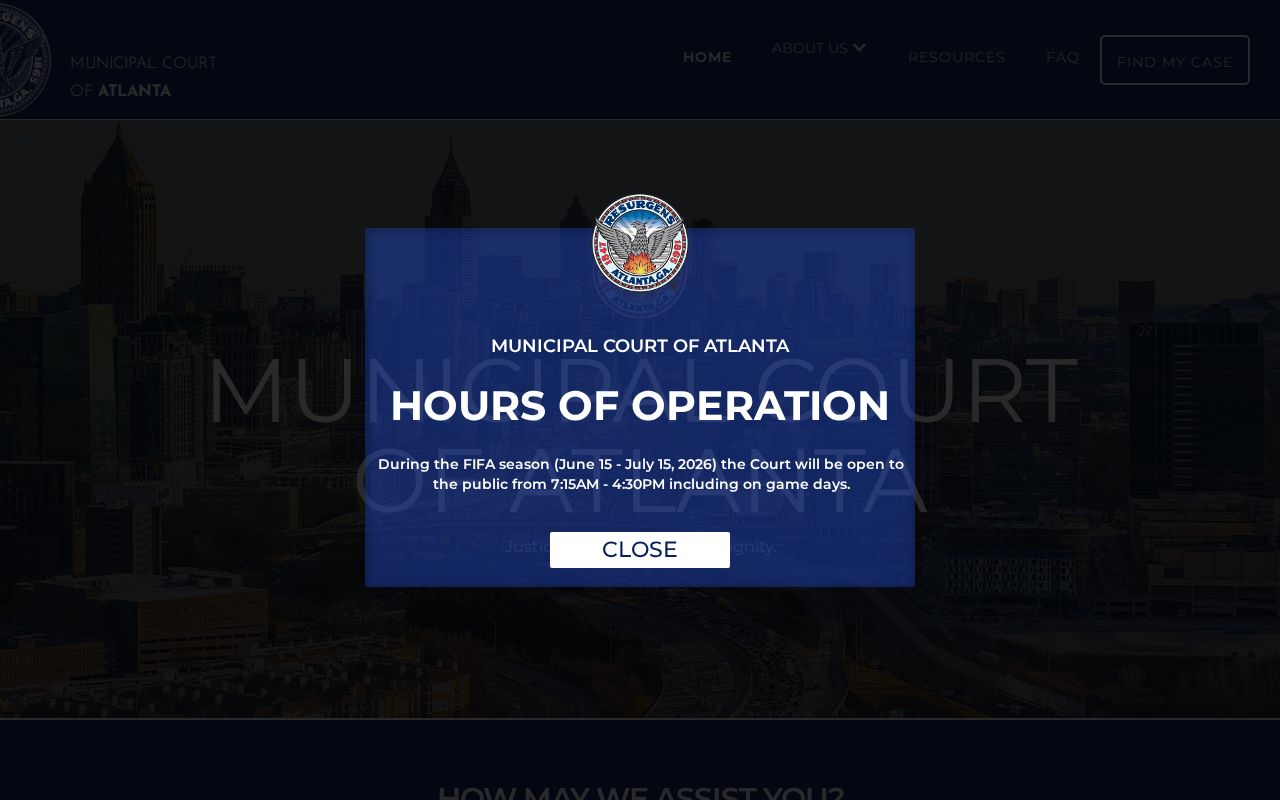
Its city citation tools are a starting point, not a substitute for DeKalb court records when prosecution moves beyond municipal authority.
Atlanta Citations and County Charges
A city citation stays with Atlanta Municipal Court only when the court has authority over it. A felony does not remain there merely because APD made the arrest. DeKalb Superior Court has felony jurisdiction, and DeKalb State Court handles county misdemeanors and DUI matters. The prosecutor's filed charge controls the court route.
If a municipal search returns no record, check the number and allow for processing, then ask whether the matter was transferred or filed elsewhere. Do not infer dismissal from a blank portal result. A docket event may also be visible even when the underlying document is not offered as a download.
The DeKalb criminal court case page explains the county clerk route without turning an Atlanta city search into a countywide survey.
Where Atlanta Records End Up
An APD report begins with the city. If an Atlanta arrest enters the DeKalb jail, the sheriff creates a booking record. A prosecutor then decides what charge to file, and the appropriate clerk maintains the docket and judgment. Fingerprint-supported arrest and disposition data may then reach Georgia's central repository.
Record flow: Atlanta Police Department › DeKalb County Sheriff and Courts › Georgia Bureau of Investigation, Georgia Crime Information Center
Recent activity is often easiest to trace at the first custodian. Older outcome research belongs with the court clerk and, for one's own statewide history, the official GCIC channel. Delays and mismatched identifiers can keep one source from matching another right away.
When Atlanta Records Look Missing
A missing result has several local explanations. The incident may be held by APD, MARTA Police, or DeKalb County Police. The booking may be in another county. A citation may remain municipal while a separate charge moves to county court. The portal may show a docket event but not the scanned filing.
Return to source paperwork. Match the agency, incident number, citation number, exact address, and date. Then contact the custodian for that record type. For a self-review that still appears incomplete, compare the police report, jail file, court disposition, and GCIC history. Ask the office that created the disputed entry to correct its source record before expecting every connected system to change.
Older Atlanta material may also require a focused records request instead of a live search. State the date range and record type, then retain the response. A custodian's notice that it has no responsive file can help identify which agency or court should be tried next.
Public Access Rules for Atlanta Records
Atlanta Police and Municipal Court records are subject to Georgia access law, but public access is not unlimited. Agencies may redact protected personal data and withhold material covered by an exemption. A request asks for existing records; it does not require the city to create a new analysis or compile a personal dossier.
Key Statutes:
Georgia Open Records Act, O.C.G.A. §§ 50-18-70 through 50-18-77 provides the public-record framework and response process.
O.C.G.A. § 35-3-35 governs dissemination of Georgia criminal-history information, with different rules for conviction and broader history data.
O.C.G.A. § 35-3-37 provides Georgia's record-restriction and correction procedures.
Use Atlanta records for lawful personal research, case understanding, or correction of your own information. Verify identity and final outcome with the originating office.