
Criminal Cases in DeKalb County Courts
DeKalb County divides criminal work by jurisdiction. DeKalb Superior Court Clerk maintains felony pleadings, docket entries, judgments, and sentences. Superior Court also receives felony matters that begin with a warrant or first hearing in Magistrate Court. DeKalb State Court handles misdemeanors, DUI, and traffic cases. City courts keep ordinance, traffic, and selected state-misdemeanor matters unless a charge is transferred.
The active DeKalb County Courthouse is at 556 North McDonough Street in Decatur. The old 1918 courthouse on the square is a landmark, not the working criminal clerk counter. A visitor should bring photo identification and the case number when known. The county judicial directory lists Superior Court at 404-371-4901 and State and Magistrate Court at 404-371-2261. Security screening applies, and interpreter requests should reach the assigned division at least ten days before a hearing.
DeKalb Criminal Court Jurisdiction
The word “State” causes a common mistake. DeKalb State Court is a county trial court, not a statewide database. Magistrate judges may issue warrants and conduct early proceedings, but a felony's durable file moves to Superior Court. The right starting point depends on the filed charge, not merely the arresting agency.
| Court | Criminal work | Access route |
|---|---|---|
| Superior | Felonies, jury trials, bound-over cases | Clerk and separate e-access provider |
| State | Misdemeanors, DUI, traffic | State Court clerk and provider |
| Magistrate | Warrants and first-stage matters | Clerk phone or counter |
| Municipal | City ordinances, traffic, selected misdemeanors | City-specific court |
| Juvenile | Youth delinquency matters | Generally confidential |
How to Search Case Records
The Georgia Judicial Council E-Access directory routes users to separate DeKalb Superior and State Court providers. The provider requires an account, and the interface may change. Case number is the cleanest key. A full name plus filing range and criminal case type can narrow a search when the number is unknown.
- Choose DeKalb Superior for a felony or DeKalb State for a misdemeanor, DUI, or county traffic matter.
- Search the case number when available. Otherwise enter the full legal name as the provider directs.
- Narrow broad results with filing dates, case type, and court. Do not treat a name-only match as identification.
- Open the docket and read each count, event, and disposition in date order.
- Ask the correct clerk for an older image, public paper file, or certified disposition that is not downloadable.
| Field | Type | Required | Use |
|---|---|---|---|
| Court | Directory choice | Yes | Select Superior or State first |
| Party or name | Text | One route | Follow displayed first/last format |
| Case number | Text | Alternative | Most precise key |
| Case type | Select | No | Choose criminal when offered |
| Filing dates | Date range | No | Narrows common names |
DeKalb Court Provider Limits
An account can reveal an index or docket without making every filed document downloadable. Older DeKalb County files may remain on paper or microfilm. Sealed material never becomes public merely because a user has an account. When an image is missing, record the case number, party name, court, and approximate year, then contact that clerk.
The Superior Court Clerk source shows the office that preserves felony records.
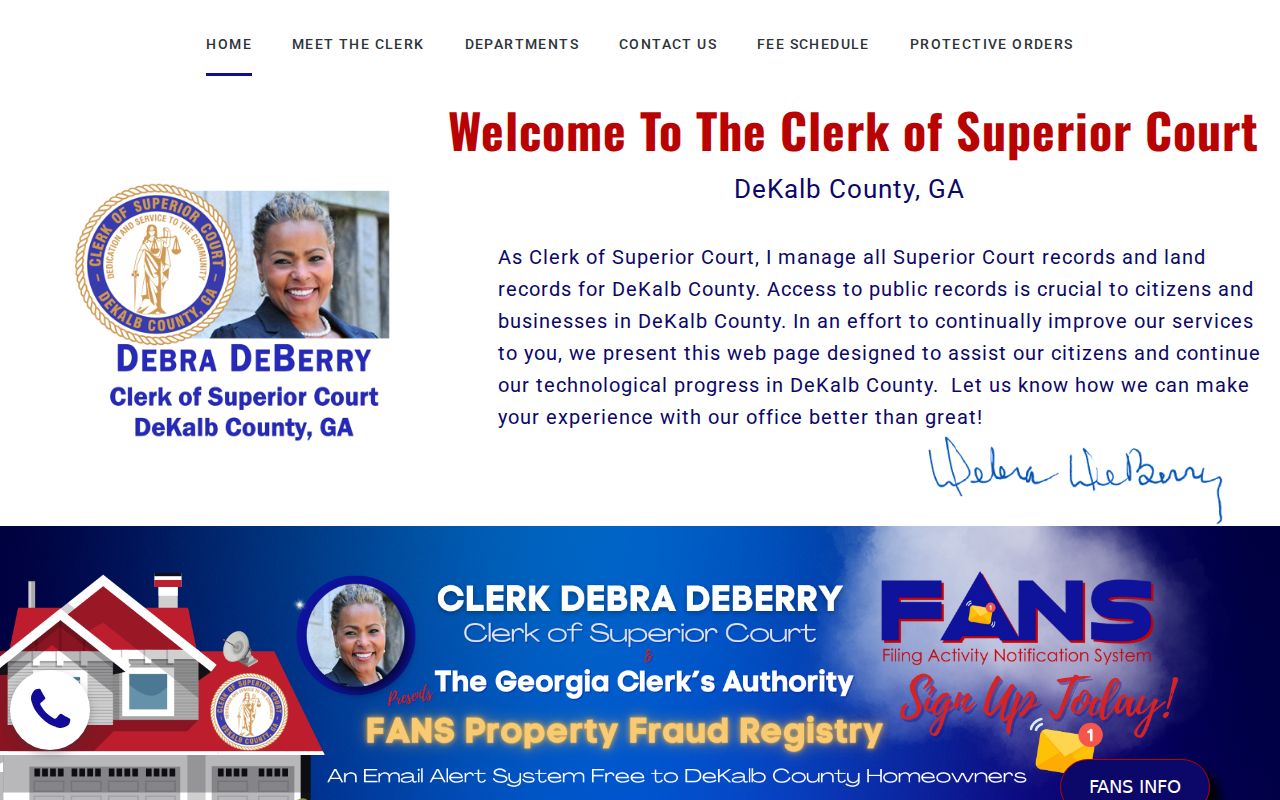
That clerk route is the proper fallback for felony documents and certified outcomes that the provider does not expose.
What the Case File Shows
A DeKalb County docket is a chronology, while the file holds the documents behind it. Read each charge count on its own. One count may be dismissed, another amended, and another resolved by plea. A filed accusation or indictment is an allegation, not a conviction. The final judgment and sentence are stronger evidence of the official result.
| Case Number and Court | Identifies the file, division, and proper custodian. |
|---|---|
| Charging Document | Shows accusation or indictment counts as filed and later amendments. |
| Docket Entries | Lists filings, arraignment, motions, calendars, pleas, orders, and warrant events. |
| Hearing Dates | Shows public dates, times, and divisions when supplied. |
| Disposition and Judgment | Records how each count ended, including dismissal, plea, or trial result. |
| Sentence and Conditions | States confinement, probation, fines, or other ordered terms. |
Read DeKalb Dispositions by Count
Several Georgia docket terms describe different outcomes. “Nolle prosequi” means the prosecutor formally declined to continue that count at that time. “Dismissed” records a court or prosecution end to a count. “Dead docket” suspends prosecution without the same final effect as an acquittal. “Bound over” means a lower court sent the matter onward. First Offender treatment is a statutory disposition path and should not be read as a routine conviction label.
- Pending
- The court has not entered a final disposition.
- Disposed
- The docket reflects an outcome, which must be read count by count.
- Nolle prosequi
- The prosecutor entered a formal decision not to proceed on that count.
- Dead docket
- The case is inactive but not necessarily resolved like a dismissal.
- Certified disposition
- A clerk-certified record of the official result, often needed to correct GCIC.
Stages of a Criminal Case
DeKalb County criminal cases may start with a warrant or arrest, but the court file begins when charges are filed. Felony matters can pass through Magistrate before indictment or accusation in Superior Court. Misdemeanors usually proceed in State Court. Pretrial motions, negotiations, and calendars may create many docket entries before any final result. A plea or trial resolves guilt; the judgment and sentence record the court's order.
Case flow: Charges Filed › Arraignment › Pretrial › Plea or Trial › Disposition › Sentencing
The filing date may lag behind a booking. That gap explains why a new jail entry can exist before a searchable DeKalb County court case appears.
A docket event is not the same as its source document. An entry may show that counsel filed a motion or the judge signed an order, while the image remains account-gated or counter-only. Note the event date and title, then ask the DeKalb County clerk whether a public copy exists. Calendar dates can change, so the assigned division remains the best source for a live hearing schedule.
DeKalb Prosecutors Split the Docket
The DeKalb District Attorney prosecutes felonies in Superior Court. The Solicitor-General handles State Court misdemeanors. This split matters when a reader seeks a final outcome, prosecutor file, or record restriction. It also helps explain why one general office cannot answer every case question.
The DeKalb State Court source presents the separate misdemeanor and traffic court.

This second provider and clerk path must be checked when the DeKalb County matter is not a felony.
A missing final result calls for a clerk request. Supply the case number, court, party name, and filing year, and ask for a certified disposition when official proof is needed. For an incorrect personal GCIC history, match that disposition to the arrest agency and date. Correction under O.C.G.A. § 35-3-34 supplies a missing or wrong fact. Record restriction under § 35-3-37 limits eligible access. A restriction may support a separate petition to seal court records, but the docket should not be assumed to change at the same time as GCIC.
Access and Restrictions
Georgia favors access to public records, but a court search is not an unrestricted copy of the file. Juvenile matters are generally confidential. Sealed filings, protected victim information, Social Security numbers, and other private identifiers may be absent or redacted. Active restrictions can make online results differ from the paper record available to authorized users.
Under the Georgia Open Records Act, an agency generally must respond within three business days by producing available records or stating timing and lawful exemptions. That is not a promise to finish a large request in three days. Court records also follow court access rules, so a county administration request does not replace a request to the clerk. Ask for segregable public portions when only part of a document is protected.
A clerk file answers what happened in a filed case. For the earlier custody event, use the county's DeKalb County arrest history channels and then reconcile the booking with the docket.