
Running a Sex Offender Check in DeKalb County
The Georgia Bureau of Investigation manages the central Georgia Sex Offender Registry through GCIC. The DeKalb County Sheriff registers and verifies people who report in the county, then submits updates to the state system. GBI says the public registry updates daily, while sheriffs must update submitted changes within two business days under O.C.G.A. § 42-1-12(i)(2).
Start with the state portal for a public search. Use DeKalb County as the geographic filter when the goal is a county list. A name search is better when identity is known. Address and radius tools can support neighborhood awareness, but a plotted point is not a legal survey. Contact the Sheriff when a local entry looks wrong or noncompliance is suspected.
Search DeKalb County by Geography
A county filter avoids mixing DeKalb entries with nearby jurisdictions. City and ZIP fields can narrow results, though spelling and boundary issues matter. Atlanta spans DeKalb and Fulton Counties, so the county field is more reliable than an “Atlanta” city search when the question is specifically about DeKalb County. Address and radius results depend on the live interface and submitted address data.
The official Georgia registry search shows the name and geography controls.
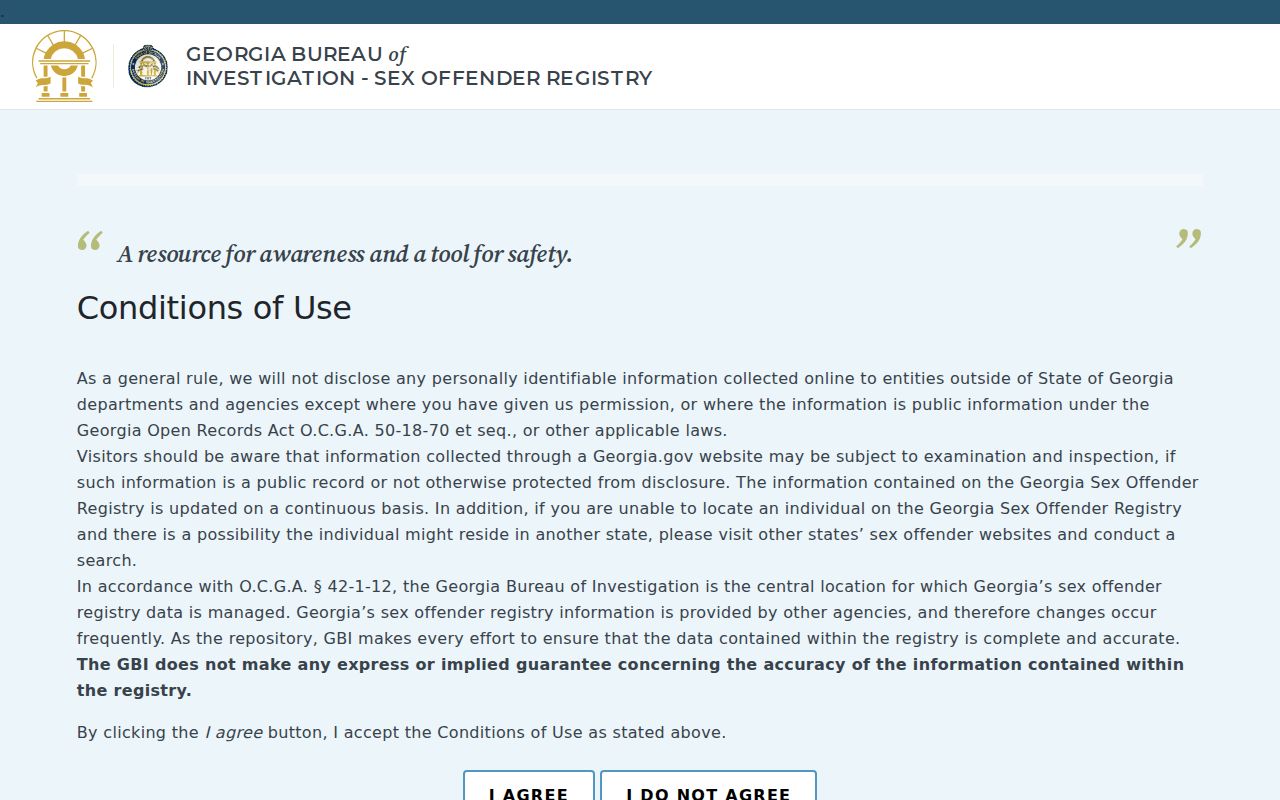
Review the result list and full profile together rather than relying on a map marker alone.
Searching the Georgia Sex Offender Registry
The registry is a public safety tool. Accept its conditions, choose a focused search, and compare identifying fields carefully. A name-only match can point to the wrong person. Geographic searches show registered addresses supplied through the statutory process, but they do not predict where any person will be at a given moment.
- Open the official Georgia registry and review its disclaimer and conditions of use.
- Enter a first and last name, or select DeKalb County and add city, ZIP, address, or radius criteria.
- Review the list or map and compare aliases, physical descriptors, status, and geography.
- Open the full profile to read the offense, conviction jurisdiction, registration status, and other submitted details.
| Field | Type | Required | Notes |
|---|---|---|---|
| First Name | Text | No | Narrows a name search |
| Last Name | Text | No | Main name field |
| Offender Type | Filter | No | May distinguish status or category |
| County | Select | No | Choose DeKalb for a county list |
| City or ZIP | Text or select | No | Spelling and boundaries matter |
| Address and Radius | Text and select | No | Supports map or proximity searching |
| Map or List | View control | No | Changes result presentation |
Missing DeKalb County Registry Names
No result is a reason to check the search terms, not a safety certificate. GBI explains that a person may be absent because the individual is deceased or deleted, does not meet Georgia's registration criteria, has not yet been submitted as a new registrant, successfully completed qualifying First Offender treatment, or was missed by the chosen spelling and filters. Juveniles generally do not register unless tried and convicted as adults, subject to the statute.
Try an alias or broader geography. Then use NSOPW when a search crosses state lines. If a known DeKalb County record appears delayed or incorrect, report the issue to the Sheriff or GBI rather than drawing a conclusion from an empty result.
What a Registry Profile Shows
A public profile joins identity, registration, and qualifying-offense fields. Some fields depend on what the submitting agency has supplied. Profiles can include an official photograph and address because the registry serves public awareness, but victim identity is not displayed. Never copy a private registrant's data into an unofficial list.
| Name and Aliases | Current name and submitted alternate names used to distinguish identity. |
|---|---|
| Photo and Description | Photograph, sex, race, age or birth data, height, weight, hair, eyes, and identifying marks. |
| Registered Address | Reported address and county; submitted vehicles, work, or school data may also appear. |
| Offense and Statute | Qualifying offense, conviction date, and conviction jurisdiction when supplied. |
| Risk Category | Georgia Level I, Level II, sexually dangerous predator, or pending assessment status. |
| Registration Status | Compliance or registration information and related custody or supervision notes when available. |
A profile does not reproduce the whole criminal case. The correct clerk maintains pleadings, judgment, and sentence, while the registry publishes the statutory safety fields.
Georgia Registry Profiles in Context
The GBI registry information source explains the state and sheriff roles behind each public entry.
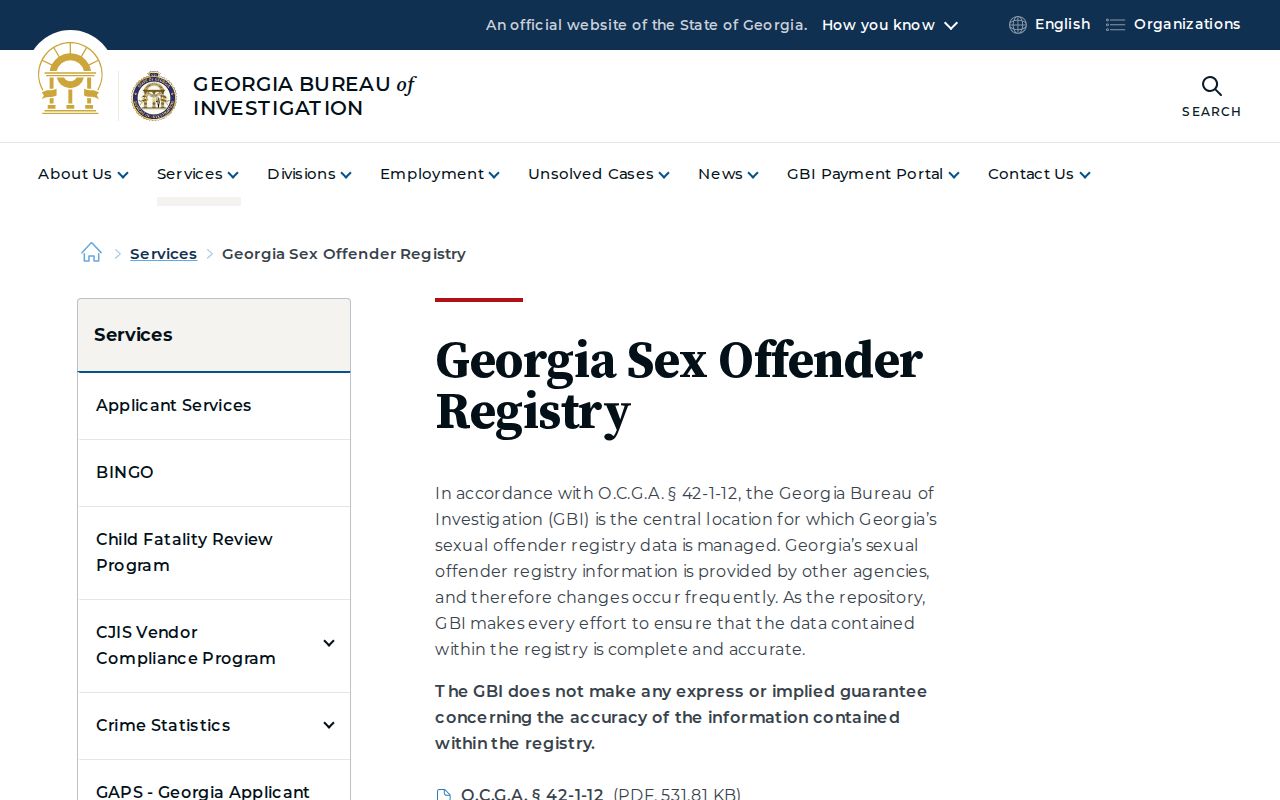
That reporting chain explains why a DeKalb County correction should begin with the local Sheriff and may also require GBI review.
The Sheriff verifies local registration facts. GDC and the Parole Board submit information for people released or supervised, and GBI enters qualifying people who move from another state. A change can pass through more than one custodian. The two-business-day sheriff submission duty does not guarantee that every public screen will reflect a real-world change at the exact moment it occurs.
Registration Requirements and Levels in Georgia
Georgia risk levels are not the federal SORNA three-tier system. The Sexual Offender Registration Review Board assigns state risk categories. Registration is generally for life unless a court grants release under O.C.G.A. § 42-1-19. Annual in-person reporting remains required even for a Level I classification, and the highest designation carries an added six-month report.
| Georgia Category | Meaning and Duration | Verification |
|---|---|---|
| Level I | Low assessed risk; generally lifetime unless released by court | Annual birthday renewal |
| Level II | Intermediate assessed risk; generally lifetime | Annual birthday renewal |
| Sexually Dangerous Predator | Highest statutory designation; generally lifetime | Annual renewal plus six-month report |
| Not Yet Leveled | Assessment pending; registration continues | Statutory reporting still applies |
Qualifying registrants generally report in person to the sheriff within 72 hours of release, supervision placement, or entry into Georgia. They renew within 72 hours before their birthday for a photograph and fingerprints and report required changes within statutory 72-hour windows. Time in custody is excluded from the usual lifetime registration period.
DeKalb County Reporting and Errors
The DeKalb County Sheriff at 4415 Memorial Drive in Decatur is the local route for registration-office instructions and suspected noncompliance. Call 404-298-8111 for current directions. Use 911 only for immediate danger. For releasable local documents that are not in the public profile, the Sheriff open-records process is the fallback.
When information appears wrong, preserve the profile details needed to identify the issue without republishing them. Explain the address, status, offense, or identity field believed to be inaccurate and contact the Sheriff or GBI. A public user cannot edit the registry. No verified DeKalb Sheriff app with proximity alerts was found, so county residents should use the official state search and NSOPW rather than rely on an unverified app.
DeKalb Maps Are Not Legal Surveys
Georgia residency and activity restrictions under O.C.G.A. §§ 42-1-15 and 42-1-16 depend on offense date, statutory category, place type, and other conditions. Some official text describes a 1,000-foot rule for specified people and periods. A registry radius is only a search setting. It does not decide whether a home, school, child-care site, or other location satisfies a legal measurement.
Property lines, entrances, later land uses, and the controlling version of the law can matter. Use the map for awareness and contact the proper government office or qualified counsel for a legal determination. Never confront a person based on a marker or attempt an informal measurement.
NSOPW Extends DeKalb County Searches
The U.S. Department of Justice National Sex Offender Public Website searches participating jurisdictions and is useful when a person may have moved across state lines. It does not replace Georgia's source record. Open the underlying state profile and follow Georgia's status and field definitions before interpreting a DeKalb County result.
The official national search source shows that cross-jurisdiction layer.
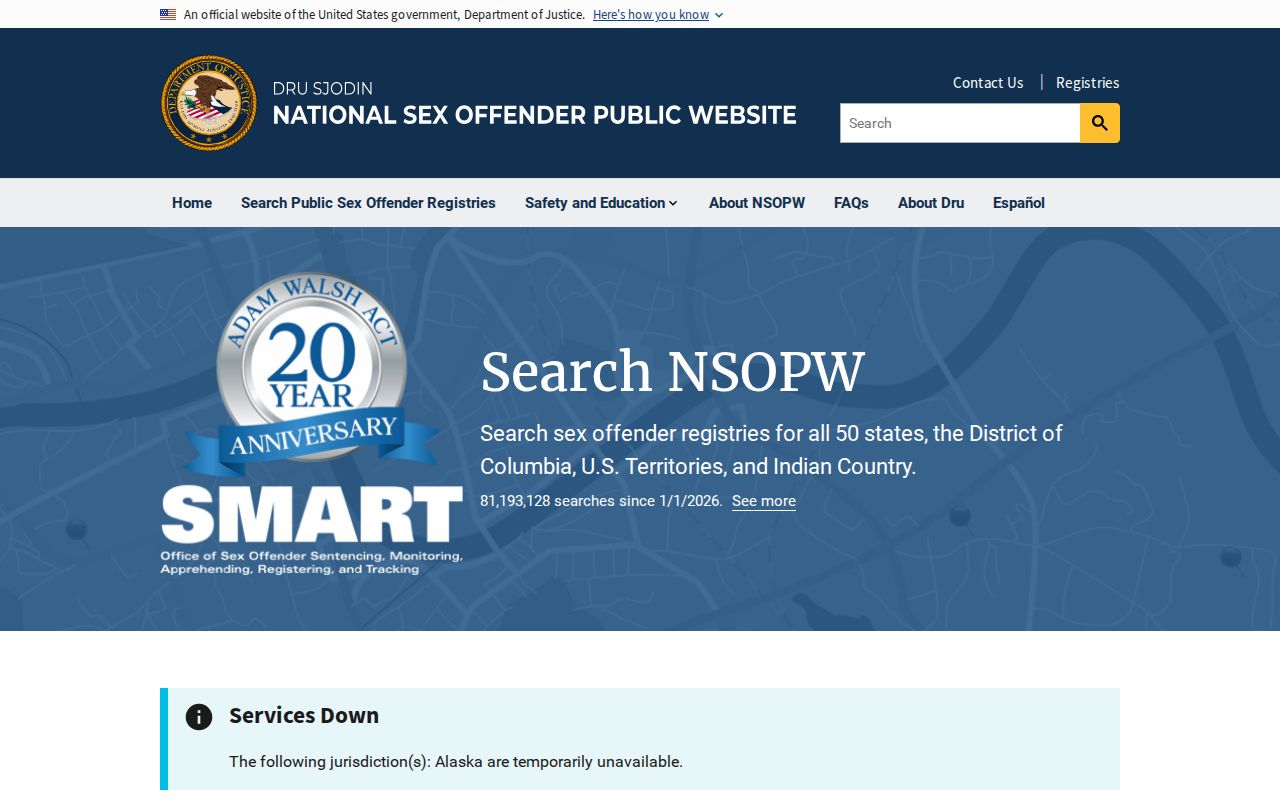
A national result should lead back to the originating registry and local sheriff for confirmation.
Georgia Lifetime Registration Petitions
Release from Georgia registration is not automatic at a federal tier anniversary. O.C.G.A. § 42-1-19 permits qualifying petitions in Superior Court after completion of custody and supervision under specified age, disability, offense, and risk conditions. Some paths require ten years since all prison, parole, and probation ended or a Level I classification. The district attorney and relevant sheriffs must receive service.
A petition is a court process, not a registry search feature. A denial generally prevents another petition for two years. Anyone reviewing their own status should obtain the controlling orders and current statutory text rather than infer eligibility from the public profile alone.
Lawful Use and Community Notification
Registry information supports reasonable personal, family, and community safety planning. Search official sources, verify the profile, and contact law enforcement about suspected violations. Do not use a profile as a full account of a person's case, present location, or future conduct. Report errors through the Sheriff or GBI.
Use registry information lawfully: Threatening, harassing, intimidating, or taking vigilante action against a registrant or household can violate Georgia criminal and civil law. The registry is for public safety awareness.
Georgia law sets the registration duties and enforcement framework in O.C.G.A. § 42-1-12. The public disclaimer and current statute control. A DeKalb County sex offender check should end with verification through the originating agency, not contact with the listed person.