
How to Check Criminal History in DeKalb County
No universal DeKalb County criminal-history screen covers every court, city, police agency, and custody system. Define the question first. A recent arrest calls for the sheriff and arresting agency. A filed charge calls for a court clerk. A statewide self-review calls for GCIC.
Use exact identifiers and follow the record through its stages:
- Identify the agency and court from the report, citation, booking, or known charge level.
- Search DeKalb Superior for a felony, State Court for a misdemeanor or DUI, and the relevant municipal court for a city case.
- Check Sheriff Inmate Lookup for current custody, then request older booking material when needed.
- Request the incident report from the arresting police agency, not from the sheriff.
- Compare the filed count and final disposition with an official GCIC self-review when accuracy matters.
A same-name match is only a lead. Confirm the court, filing date, case number, birth information when public, and charge history before treating a result as connected.
Four DeKalb County Criminal Records
One event can create four records that answer different questions. The police incident report records allegations and investigation. The sheriff booking file records intake and custody. The court case records prosecution and outcome. GCIC links reported Georgia arrest cycles to reported dispositions.
| Record | Custodian | Best use |
|---|---|---|
| Incident or arrest report | Responding police agency | What officers recorded |
| Booking record | DeKalb County Sheriff | Intake, bond, custody, release |
| Court case | Superior, State, or municipal clerk | Filed counts and disposition |
| GCIC history | GBI/GCIC | Identity-linked statewide self-review |
Charges can change between arrest and filing. A dismissal can remain on a public docket even when eligible GCIC history is restricted. No source should be used as a shortcut for the others.
Official Georgia Background Checks
The Georgia Bureau of Investigation's Georgia Crime Information Center maintains the state repository. Most Georgia sheriff or police departments can provide a Georgia history for self-review under local procedures. DeKalb County Police publishes CriminalHistoryCheck@dekalbcountyga.gov; the research did not locate a current official local fee, so confirm requirements before visiting or sending information.
Without written consent, Georgia generally releases felony-conviction information under O.C.G.A. § 35-3-35. Broader history usually requires fingerprints or written consent. Authorized fingerprint checks use GAPS through Fieldprint and a requesting program's agency code. This is not an anonymous public people-search service.
The official GCIC source is shown below.
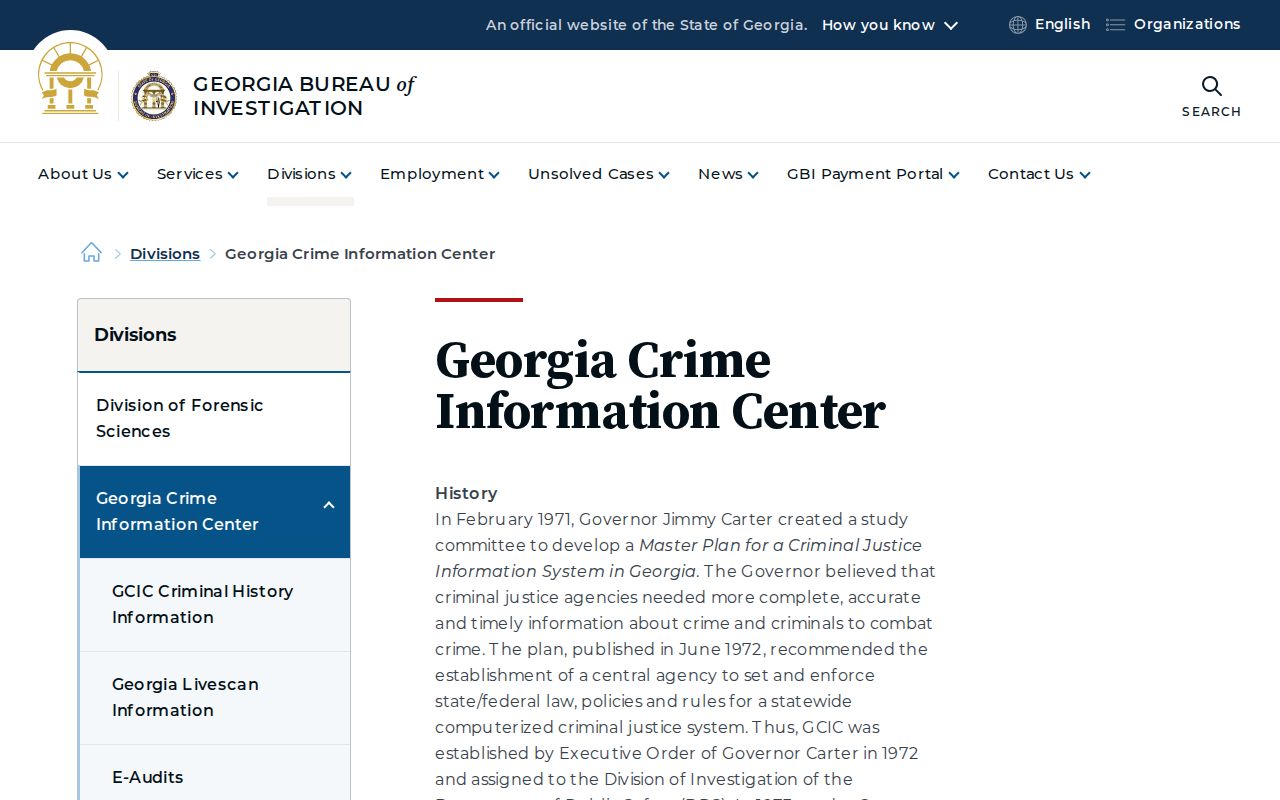
GCIC explains the state repository layer, which should be reconciled with the DeKalb court disposition when reviewing one's own record.
DeKalb County GCIC Record Inspection
GCIC's Decatur lobby makes the statewide repository unusually close to DeKalb County residents. Record inspection and fingerprint help are appointment-only. Call 404-244-2639, option 1. Same-day appointments are unavailable.
For an authorized fingerprint response, register through the requesting agency or program and use GAPS Fieldprint to select a live appointment location. Storefronts and schedules change, so use the current inventory rather than an old address. The Fieldprint interface pictured below comes from that official channel.
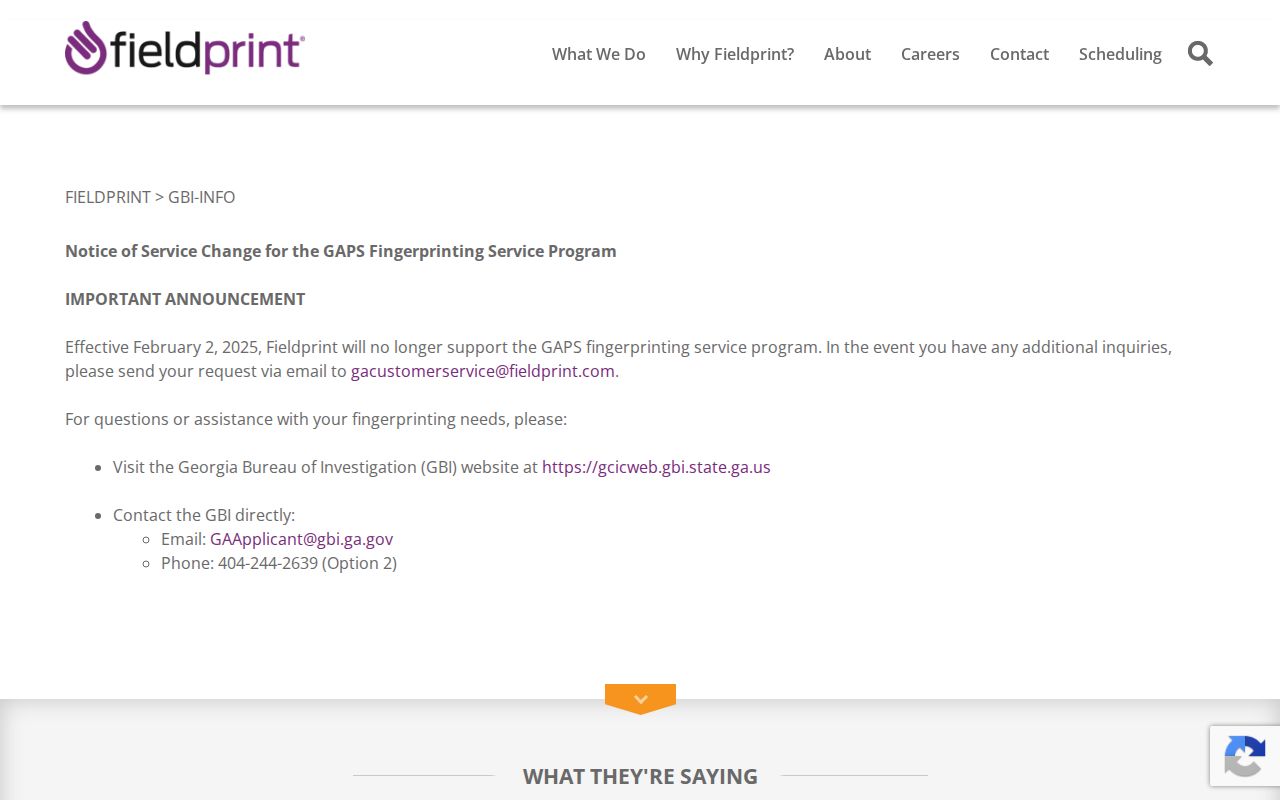
The agency code determines the authorized response and recipient. It is not a general tool for checking another person's history.
| Official product | Coverage | Access |
|---|---|---|
| Local Georgia name check | Georgia data allowed by consent rules | Participating police or sheriff; local terms |
| GAPS fingerprint check | Authorized state/federal response | Agency code and Fieldprint registration |
| GCIC inspection | Subject's Georgia history | Appointment; no same-day service |
| FBI Identity History Summary | Subject's FBI fingerprint history | Fingerprints and $18 FBI fee |
Types of Criminal Records in DeKalb County
DeKalb County record types reflect different stages and agencies. An incident report can exist without an arrest. A booking can exist without a conviction. A warrant can be sealed or unserved. A court file can show dismissed and amended counts that a restricted GCIC response does not show.
- Police reports: narratives and evidence details held by the responding agency.
- Bookings: sheriff intake, holds, bond, custody, and release data.
- Court files: accusations, indictments, motions, pleas, orders, and sentences.
- Warrants: judicial orders processed by courts and law enforcement.
- Custody and supervision: county jail, GDC, VINE, DCS, and parole records with different scopes.
- Registry entries: public statutory information for qualifying sexual offenses.
Juvenile records are generally confidential. Police investigative material and personal identifiers may also be withheld or redacted.
DeKalb County Record Custodians
The active courthouse, jail, and police records office are not one department. Sending a police-report request to the sheriff will not retrieve a County Police report. The main offices are:
DeKalb County Courthouse
556 N. McDonough St., Decatur, GA 30030
404-371-4901
Superior felony and clerk routing
DeKalb County Sheriff
4415 Memorial Drive, Decatur, GA 30032
404-298-8111
Jail, booking, and sheriff records
DeKalb County Police
770-724-7477
GovQA police open-records route
The official DeKalb County directory is the source for county agency routing shown below.
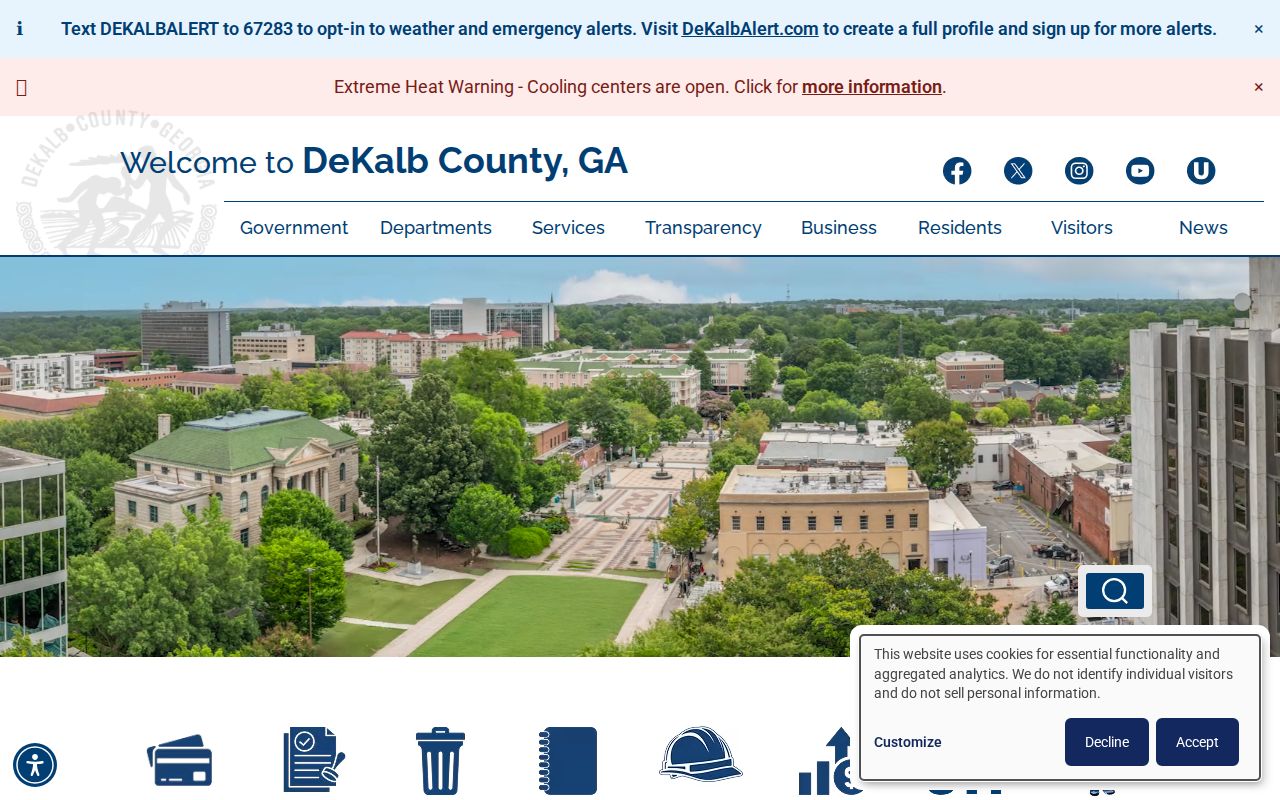
The directory helps identify the office, but each custodian's own page controls current request details.
What a DeKalb County Criminal Record Shows
A GCIC history can contain identification data, arresting agency, arrest date, arrest charges, submitted judicial disposition, and Georgia correctional custody. Public versions redact protected identifiers. A court docket adds filings, hearings, attorneys, motions, count-level outcomes, and sentence orders.
| Name and Identifiers | Name, birth data, sex, race, and physical descriptors where lawfully shown |
|---|---|
| Arrest and Booking | Agency, date, booking number, alleged charges, holds, bond, and custody |
| Charges and Statutes | Arrest-era allegations plus prosecutor-filed or amended counts |
| Disposition | Dismissal, plea, verdict, First Offender treatment, or other count result |
| Sentence | Custody, probation, fine, and court-ordered terms where public |
| Supervision | Public correctional status, while officer notes and conditions may remain confidential |
Read the cycle in time order: arrest, filed charge, disposition, then sentence or custody. An arrest line without a linked disposition may signal delayed reporting rather than a pending case.
DeKalb County Criminal Court Locations
The working criminal courthouse is the modern complex at 556 North McDonough Street, not the prominent 1918 Old Courthouse on Decatur Square. Superior Court hears felonies; State Court hears misdemeanors, DUI, and traffic; Magistrate Court issues arrest warrants and handles early matters.
The official DeKalb judicial system page provides the courthouse routing pictured below.
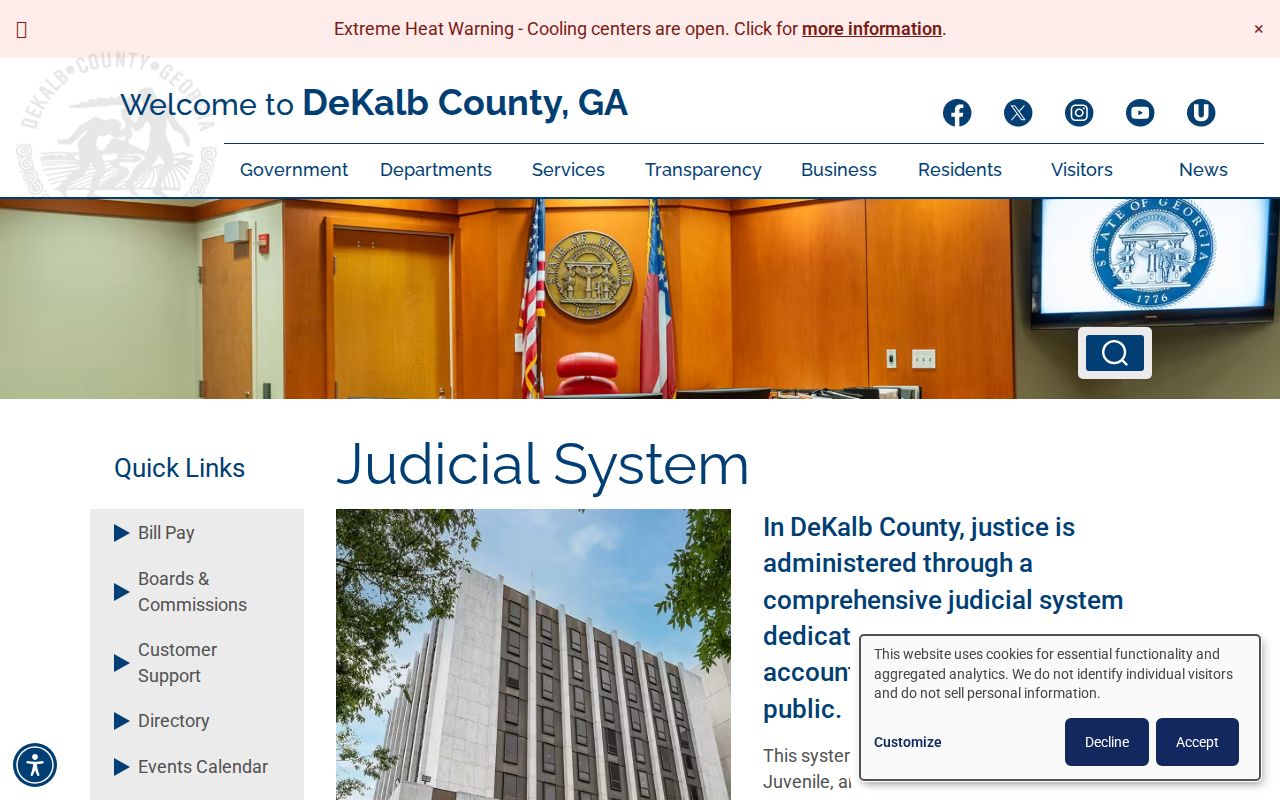
Its unified landing page points users to each court. The Georgia Judicial Council e-access directory lists DeKalb Superior and DeKalb State separately, and the linked providers require an account.
Note: Request a court interpreter through the assigned judicial division at least ten days before a DeKalb hearing.
Public Access Laws for DeKalb County Criminal Records
The Georgia Open Records Act favors access to existing public records but permits redaction and exemptions. An agency must respond within three business days by producing available records or explaining availability and lawful withholding. That deadline is not a promise to finish a large production in three days.
Key Statutes:
O.C.G.A. § 50-18-70 states Georgia's public-access policy.
O.C.G.A. § 50-18-71 governs copies, electronic records, labor, estimates, and responses.
O.C.G.A. § 50-18-72 lists exemptions and protected information.
O.C.G.A. §§ 35-3-34 and 35-3-35 govern inspection, correction, and criminal-history dissemination.
O.C.G.A. § 35-3-37 governs record restriction and related sealing.
Ask for an existing report or export. An office need not create a new compilation to answer a question.
DeKalb County Records Fees and Forms
The sheriff's online form is the fallback for historic booking and sheriff-created material. It allows ten cents per letter or legal page plus search, retrieval, and redaction labor after the first fifteen free minutes. Labor cannot exceed the rate of the lowest-paid qualified employee.
| Item | Published rule |
|---|---|
| Letter/legal paper copy | Ten cents per page |
| Search and redaction labor | First fifteen minutes free, then lawful qualified-employee labor |
| County estimate above $25 | Requester approval required |
| County estimate above $500 | Advance payment required |
| FBI subject summary | $18 FBI fee, plus fingerprints; channeler may add cost |
Exact local criminal-history and certified-copy charges were not found in the reviewed official pages. Ask the custodian for a written estimate before ordering.
The sheriff and county GovQA forms serve different files. Use GovQA for County Police incidents and the sheriff form for jail or sheriff records.
Sealed, Expunged, and Restricted Records
Georgia calls its main relief process record restriction. Under O.C.G.A. § 35-3-37, eligible post-July 1, 2013 arrests generally begin with the prosecutor. Older arrests ordinarily begin with the arresting agency. Dismissals, no prosecution, and some completed diversion outcomes may qualify, while convictions do not simply vanish.
Restriction limits GCIC dissemination for noncriminal-justice purposes. Criminal-justice agencies retain access, and a public court file is not erased automatically. Subsection (m) provides a separate petition to seal related court records when its test is met. In DeKalb County, identify whether the District Attorney handled a felony or the Solicitor-General handled a State Court misdemeanor, then obtain the disposition from the correct clerk.
If GCIC lacks a dismissal, gather the certified disposition and arrest identifiers. Send official proof through the update channel rather than relying on a screenshot.
DeKalb County Jail and State Custody
The sheriff's inmate lookup answers current DeKalb County Jail custody. It is not a conviction database or a full booking archive. A released person can leave the live result before the filed case appears. Historical booking material belongs in a sheriff records request.
After transfer to state custody, use GDC Find an Offender. Use Georgia VINE for custody notifications, not as a certified criminal-history product. The official GDC search shown below covers a different stage from the county jail.
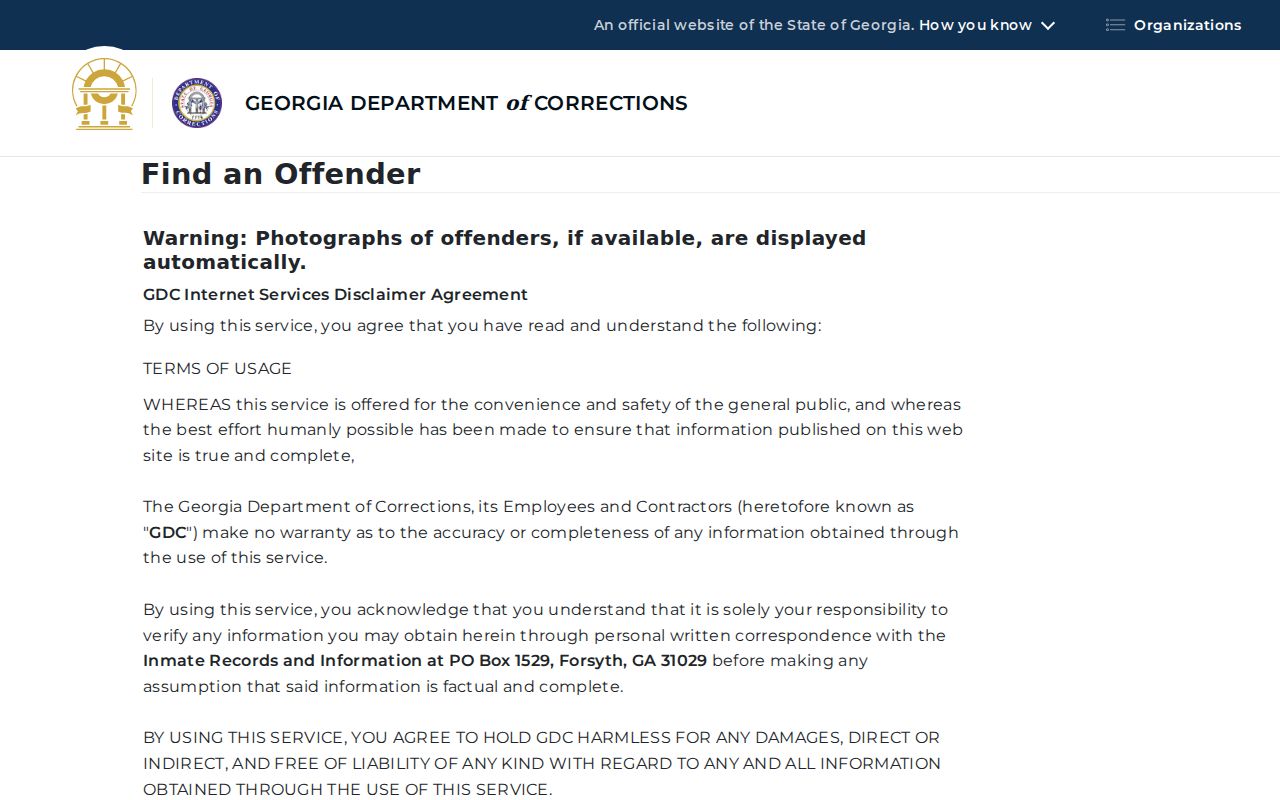
A county detainee may not appear in GDC, while a transferred person may no longer appear on the county roster. Search the system that matches the custody stage.
DeKalb County Criminal Warrant Checks
DeKalb Magistrate Court issues arrest warrants, while Superior, State, and municipal judges can issue bench warrants or capias orders. The sheriff processes county warrants. Research found no comprehensive public real-time county warrant database, so use the fallback chain.
Call the issuing clerk, ask the sheriff, search the filed docket, and submit a focused records request for releasable information. Unserved, sealed, search, and juvenile warrants may be withheld. To resolve one's own possible warrant, obtain the court and case number, request current instructions, keep any recall order or receipt, and verify that court and sheriff systems updated.
A city failure-to-appear program affects only that municipal docket. Stonecrest's May 2026 event was not a countywide warrant amnesty.
DeKalb County Registry and Supervision Records
The Georgia Sex Offender Registry route for DeKalb County supports lawful community awareness. GBI manages the public system, while the sheriff enters and verifies local information. A missing result is not proof that a person has no history, and registry information must never be used for threats or harassment.
Adult felony probation and parole field work belongs to the Georgia Department of Community Supervision. Parole decisions belong to the State Board of Pardons and Paroles. There is no general public probation roster. Check the sentencing docket, GDC public profile, or assigned office for public supervision information.
- Probation
- Court-ordered supervision in place of or after confinement.
- Parole
- Conditional release decided by the State Board, with field supervision by DCS.
- Registry entry
- Public statutory information for a qualifying offense, not a general rap sheet.
Criminal Records by City in DeKalb County
City boundaries change which police department and municipal court hold the first record. Atlanta crosses county lines, Stonecrest uses DeKalb County Police, and Brookhaven operates its own police department. Those differences make the city source the best first step for local incidents and citations.
Atlanta Criminal History
APD and Municipal Court routes, with a DeKalb/Fulton boundary check.
Stonecrest Criminal History
County Police reports and Stonecrest Municipal Court citations.
Brookhaven Criminal History
Brookhaven Police records and Municipal Court at the Public Safety Building.
DeKalb County Criminal Charge Decisions
Police charges describe the arrest stage. Prosecutors decide what to file. The DeKalb District Attorney handles felonies in Superior Court, while the Solicitor-General handles State Court misdemeanors. A count can be amended, dismissed, merged, or resolved differently from the arrest label.
The official DeKalb District Attorney source appears below.
The prosecutor split also controls which office handles many post-2013 record-restriction requests. Always read each count and final order instead of treating the case caption as the outcome.